
Workshops to think about: the T-Talks
T-Talks: what is it?
The T-Talks are seminars that will prepare you. For what, you are asking? We are planning the Tharandter Gespräche as a triad of politics, science and economy. We will bring them together in the form of panel disucssions (HERE you find more information).
As the Tharandter Gespräche are for you, you should ask the questions! Your questions for the panel discussions were formed in the T-Talks, so it is very recommended that you take part in them. It means success or ruin of the format.
Experts are invited to the seminars, who are going to introduce you into the topic. They will teach you the basics und explain common processes. The ultimate goal is to have more questions than answers as you encountered the true problems lying beneath the surface. Why was xy decided? How is xy financed? What is achieved by xy? At the Tharandter Gespräche on 26th November 2026 you get the chance to clear up these questions with actors of the forestry sector.
Which T-Talks are planned?
We are organizing 5 seminars for you. You can find dates and contents in the following chart:
tba
Title:
Who sows the future?
Time and place:
21.10.26, 17 to 19:30 pm
Hauptgebäude H3, Pienner Straße 8, 01737 Tharandt
Initial situation:
As lack of supply meets high demand, acute seed shortage slows down climate-stable forest conversion.
Contents:
Political situation on national level and state level
Climate stable silviculture has high political priority but the funding objectives of the governments often meet acute shortage. To gain a better overview, the most important websites, forestry portals and science papers shall be presented.
Seed availability
The rapidly increasing demand for climate-resilient tree species is currently encountering a dramatic shortage, as extreme weather events and heat stress are drastically reducing the seed supply. This acute seed shortage is already noticeably slowing down the urgently needed forest conversion. The forestry sector faces the challenge of using this scarce natural resource extremely efficiently to secure the foundation for future generations of forests.
Legal regulations
We'll take a brief look at seed regulations in Germany to understand how genetic diversity is preserved and increased. We'll also consider the EU: New rules are intended to ensure uniform seed regulations across national borders, but will this actually work?
Speakers:
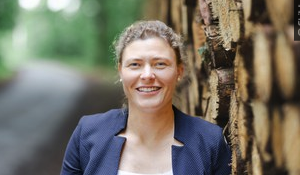
Dr. Katja Skibbe
TU Dresden, Professur für Waldbau
Dr. Heino Wolf
TU Dresden
Uwe Leonhardt
District office Bautzen
Title:
Sägen wir an unserer eigenen Zukunft? – Die deutsche Holzindustrie im Klimawandel
Time and place:
t-Talk:
28.10.26, 17 to 19:30 pm
Hauptgebäude H3, Pienner Straße 8, 01737 Tharandt
t-Walk (field trip to a saw mill):
27.10.26, 9:15 am to 15:30 pm
Meeting point: Tharandt bus station (7:30 am)
Destination: HS Timber Productions GmbH, Industriestraße 1, 02923 Kodersdorf
Initial situation:
Durch den menschengemachten Klimawandel werden Extremwetterereignisse immer häufiger. Dieses Jahr (2026) wurde der Hitzerekord in Deutschland schon wieder gebrochen. Der notwendige Waldumbau ist kein neues Thema der Forstwelt, aber ein immer drängendes. Die Folgen sind eine sich veränderte Baumartenzusammensetzung, andere Qualitäten des Holzes sowie die Notwendigkeit nach klugen Ideen, wie man auf die sich verändernden Bedingungen reagiert.
In diesem T-Talk soll es um die Holzindustrie gehen: Hat die deutsche Sägeholzindustrie unter dem Worst-Case-Klimaszenario überhaupt noch ein robustes Geschäftsmodell? Und wie müssen wir als Forstis darauf reagieren? Schließlich machen Holzerlöse aktuell einen Großteil der Einnahmen der deutschen Forstwirtschaft aus (z.B. bei den Bayerischen Staatsforsten 84–91% der Gesamteinnahmen, bei den Niedersächsichen Landesforsten 56-67%, siehe Kaliszewski et al., 2025).
Contents:
zuvor: vorbereitende Exkursion in das Sägewerk HS Timber Productions GmbH am 27.10.26
Future yields of hard wood
The necessary forest conversion is changing the future timber supply, and the proportion of hardwoods is gaining in importance. Which tree species will be able to provide usable timber in the future? What qualities can be expected, and how secure is the timber supply under climate stress? What regional differences exist? And what conflicts of use arise from these differences?
Timber construction in the construction industry
The building sector is responsible for approximately 40% of greenhouse gas emissions. To combat Germany's biggest climate offender, particularly climate-friendly timber construction is being discussed. But what percentage of building materials can be replaced by wood? How regionally can it be sourced? Can hardwood structurally replace softwood? How does silviculture look like to fulfill the technical requirements for wood? And what legal hurdles do we face?
The role of (small) saw mills
The sawmill industry is facing increased pressure. We are particularly interested in the consequences of changing forest management practices on timber supply. How can we secure regional timber supplies? How strongly do political regulations influence the industry? How can we support small sawmills?
Alternative wood uses: Bio-based plastics
Given finite resources, wood is gaining importance as a basis for new materials, also to maintain the economic significance of forestry. What possibilities exist for replacing fossil-based plastics with wood? What are the technical limitations? How sustainable are bio-based products really, and will such uses play a role in the future competition for wood as a raw material? And can we compensate, both materially and economically, for the declining share of (softwood) sawlogs through alternative uses of wood?
Speakers:
Susann Bender
Thünen Institute
Prof. Steffen Tobisch
Institute for Wood Technology Dresden
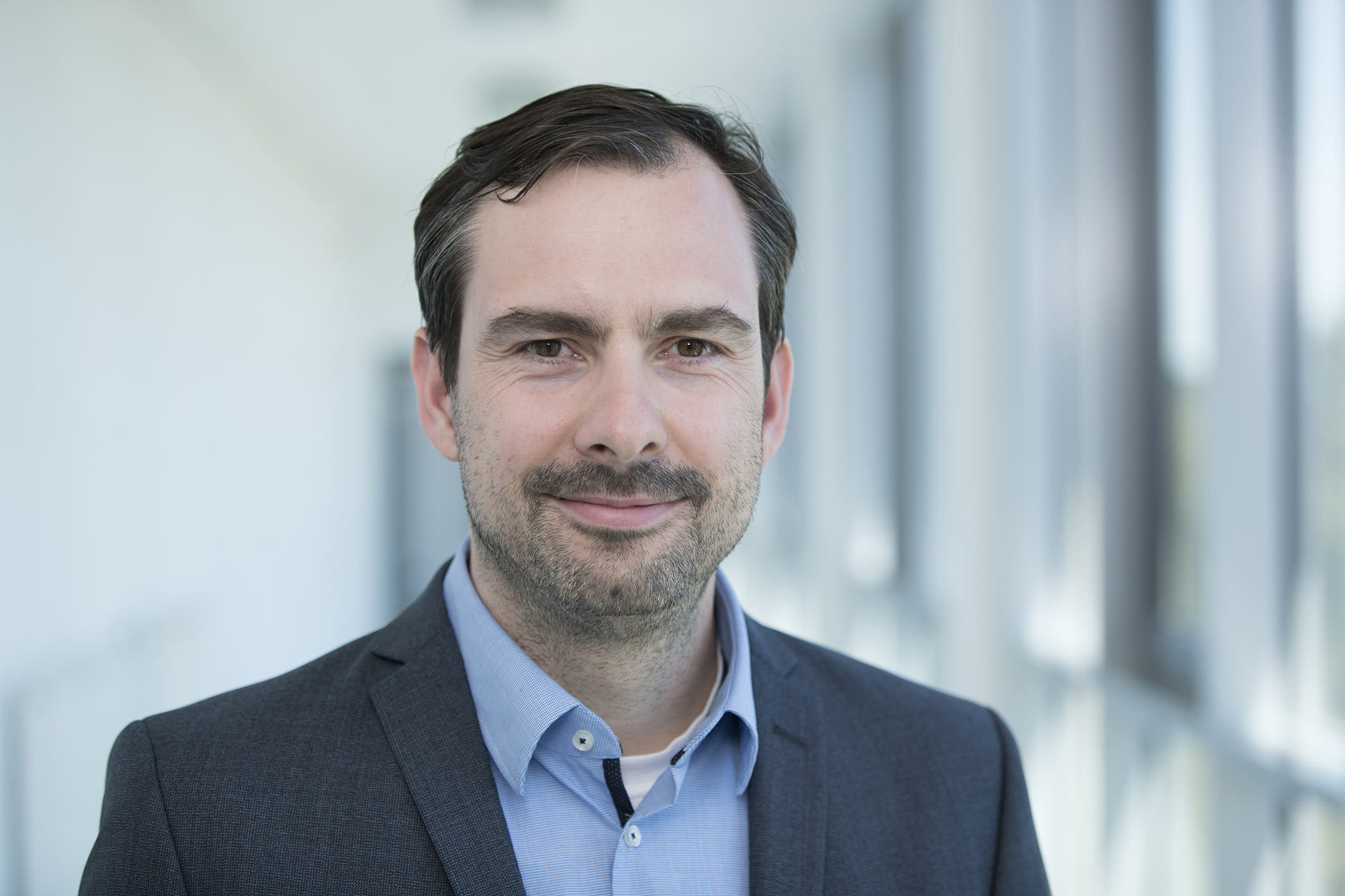
Prof. Dr.-Ing. Patrick Hirsch
Gruppenleiter „Nachhaltige Werkstoffe und Prozesse“, Fraunhofer-Institut für Mikrostruktur von Werkstoffen und Systemen IMWSPatrick Hirsch
Fraunhofer Institute for Microstructure of Materials and Systems IMWS
Sources:
Kaliszewski, A., Jabłoński, M., & Młynarski, W. (2025). Diverse ecosystem services as a source of income in forestry – a comparison of selected European state forest enterprises. Economics and Environment, 91(4), 867. https://doi.org/10.34659/eis.2024.91.4.867
https://www.tagesschau.de/inland/temperaturrekord-hoechstwert-in-deutschland-100.html (seen on 30.06.26)
Title:
The forest is changing. Are we?
Decisions, forest identity, and responsibility in the climate crisis
Time and place:
04.11.2616:30 to 19:30 pm
Hauptgebäude H3, Pienner Straße 8, 01737 Tharandt
Initial situation:
The climate crisis presents forestry with a particular challenge: We must make decisions about forests today, the effects of which will only become apparent decades from now. At the same time, the future is becoming increasingly difficult to predict. Scientific findings provide important foundations, but cannot completely relieve us of the burden of making decisions under uncertainty.
So how can we remain capable of acting if we don't know for sure which decision will prove to be the right one in 30, 50, or 100 years? And why is change so difficult even when the pressure to act is obvious?
The T-Talk therefore focuses on the people who shape transformation: on their experiences, their knowledge, their scope for action and on how education and professional self-image shape our decisions about the forest.
Contents:
Lecture? Not a chance.
An interactive T-Talk with Michael Suda about transformation, uncertainty and the question of what it actually takes to shape the forest of the future – with changes of perspective, discussions and a good dose of humor.
The central question is: How do we make decisions in the climate crisis – and what do we need to remain capable of acting even under uncertainty?
Together with Prof. Dr. Michael Suda and the participants, we will be discussing, among other things:
- the question of why changes in forestry can be difficult despite high pressure to act,
- the relationship between scientific forecasts, experiential knowledge and professional intuition,
- Self-efficacy and group efficacy as a basis for shaping transformation processes,
- the ideas about forest and society that shape our forestry training and our professional self-image,
- dealing with uncertainty, responsibility, and the possibility of being wrong in one's decisions,
- as well as the question of what skills future professionals need to actively shape the transformation.
The explicit aim is not to find “the one right solution” for the forest of the future. Rather, we want to highlight different experiences, perspectives, and approaches and discuss together how a diverse forestry sector can deal with a future that cannot be fully planned.
Through interactive exercises, discussions and a World Café, the workshop invites participants to question their own perspective and reflect on their role as a future professional.
Speakers:
Prof. Dr. Michael Suda
Former Professor of Forest and Environmental Policy, Technical University of Munich

You are interested? Register yourself now!
Click HERE.